Amazon does not sponsor or endorse this site, and every recommendation here is my own. Product links on this page go to Amazon.com and are not affiliate links right now.
A can opener is one of those tools you don't think about until it slips, skips or leaves the lid hanging by a thread. A good one grabs the rim on the first try, turns smoothly, and lasts for years. Here's how the main types differ and what to look for.
The main types
| Type | How it cuts | Good for | Watch out for |
|---|---|---|---|
| Traditional handheld | A wheel cuts through the top of the lid, just inside the rim | Most people; compact, cheap, familiar | The cut lid and can edge are sharp |
| Smooth-edge (side-cutting) | Cuts the side of the seam, below the rim | Anyone who wants no sharp edges; the lid can go back on as a cover | Bulkier, and it takes a try or two to learn |
| Electric | A motor turns the wheel; you hold the can in place | Limited grip strength, or opening many cans | Counter space, cost, an outlet, harder to clean |
A good one grabs the rim on the first try, turns smoothly, and lasts for years.
What makes a good can opener
- A sharp cutting wheel and a gear that grips. Together they hold the rim firmly so the opener doesn't slip off halfway around.
- An easy-turning knob. A larger knob gives more leverage, which matters if your hands get sore.
- Comfortable handles. Wide, padded handles make it easier to squeeze the opener closed on the can.
- Stainless steel parts. They resist rust, but all can openers last longer when dried right away.
- Easy cleaning. The wheel touches food. On most handheld openers it needs a wipe after every use.
How to use a traditional handheld opener
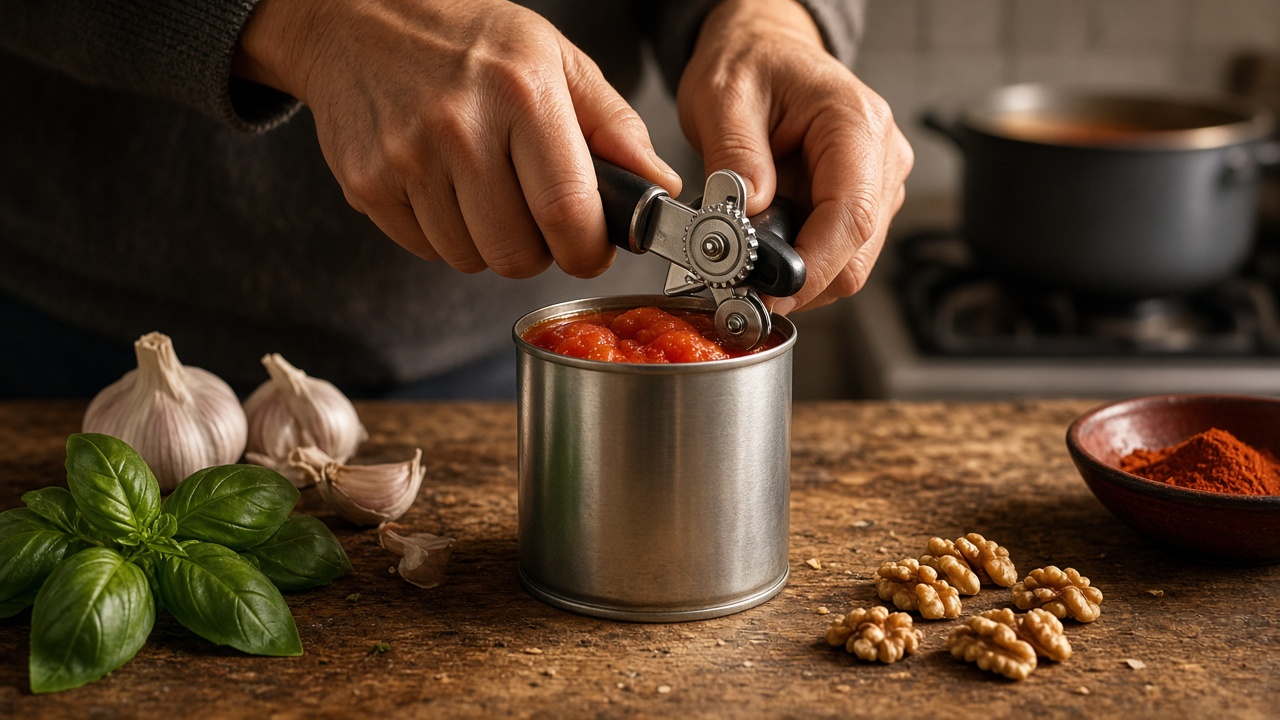
- Open the handles wideHold the opener with the cutting wheel facing down toward the lid.
- Seat the wheel inside the rimThe cutting wheel sits on top of the lid just inside the raised rim, and the gear sits against the outside of the rim.
- Squeeze the handlesYou'll feel a small pop as the wheel pierces the lid.
- Turn the knob steadilyKeep the can flat on the counter and turn until you've gone all the way around.
- Lift the lid carefullyThe edge is sharp. Lift it with a fork or the tip of a butter knife rather than your fingers.
How to use a smooth-edge opener
- Rest the opener on top of the canLine up the curve on the opener with the edge of the can, following your model's instructions.
- Turn the knob clockwiseKeep going until you've gone all the way around and the turning gets easier.
- Release itMany models need one turn back the other way to let go of the can.
- Lift off the lidSome models have small pliers built in for this. The lid looks untouched, but it lifts right off.
Care and troubleshooting
- Wipe the cutting wheel after each use. Food left on the wheel dries on and ends up in the next can.
- Hand wash in warm soapy water, then dry right away. Don't leave it soaking; that's when rust and stiff gears start.
- Scrub the gear now and then with an old toothbrush to clear stuck-on residue.
- If it slips off the rim, check that the wheel is fully inside the rim before you squeeze, and keep the can flat.
- If it skips spots, the wheel may be dull or the gear worn. Most handheld openers are inexpensive to replace.
- Don't open cans that are bulging, leaking or deeply dented, especially along the seam. Food-safety agencies advise throwing them out.
 My pick
 for most kitchens: KitchenAid Classic Multifunction Can Opener
The KitchenAid Classic Multifunction Can Opener is a familiar, traditional-style handheld opener with a few helpful upgrades. According to the listing, it has a stainless steel cutting wheel, an oversized turning knob for leverage, wide padded handles and a built-in bottle opener. It comes in many colors. KitchenAid says to hand wash it with warm water and mild detergent and dry it immediately, and lists a one-year replacement and lifetime limited warranty.
KitchenAid Classic Multifunction Can Opener
Check the current price on AmazonAlternatives
- For no sharp edges: OXO Good Grips Smooth Edge Can Opener. OXO says it cuts below the rim so neither the can nor the lid has a sharp edge, keeps the wheel out of the food, and has built-in pliers to lift the lid. It's hand wash only, bulkier and more expensive than a basic opener.
- For weak or painful hands: an electric opener does the turning for you. Look for one with a removable cutting part that's easy to clean.
The bottom line
For most kitchens, a well-made traditional opener with a big knob and comfortable handles is all you need. Choose a smooth-edge model if sharp lids worry you, and an electric one if turning a knob is hard on your hands. Whatever you pick, wipe it, hand wash it and dry it, and it will last much longer.