Amazon does not sponsor or endorse this site, and every recommendation here is my own. Product links on this page go to Amazon.com and are not affiliate links right now.
Once you have a good pair of kitchen shears, you'll reach for them more than you expect. A lot of kitchen cutting doesn't need a cutting board at all. Snipping chives over a bowl, trimming fat off a chicken thigh, or cutting a pizza when the wheel has gone missing is faster with shears than with a knife.
What kitchen shears are good for
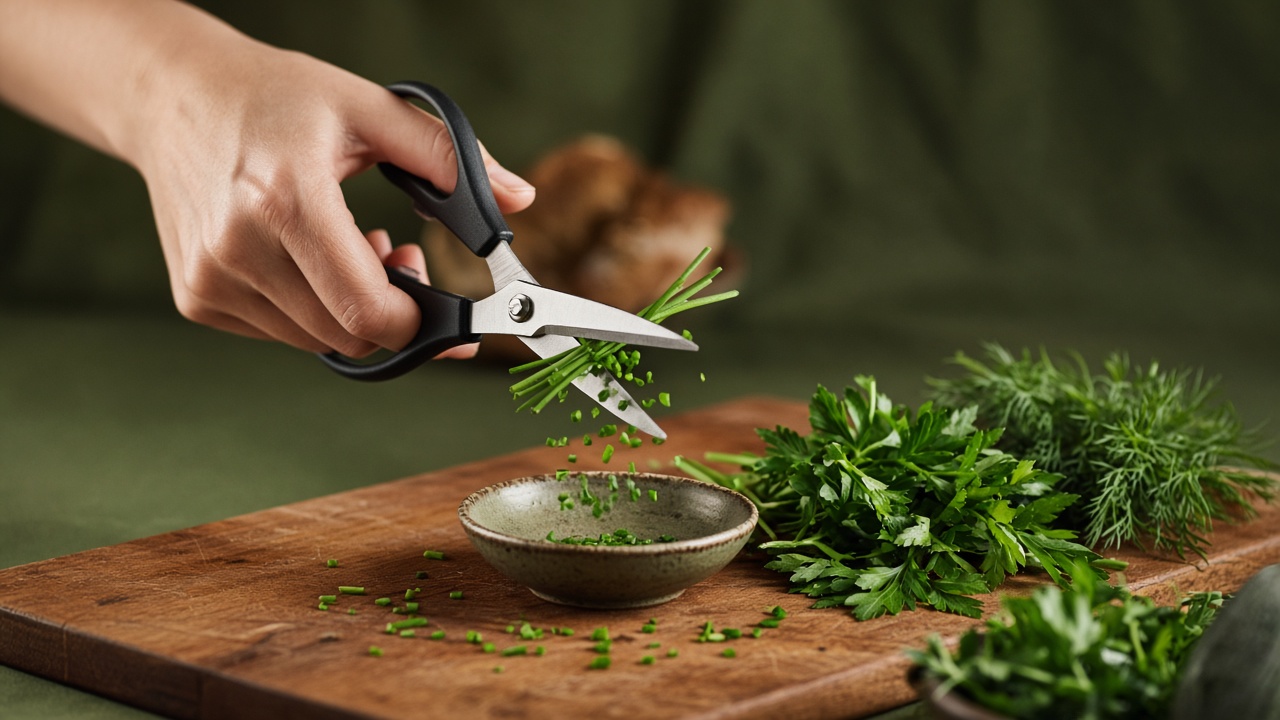
- Herbs straight over the pan or bowl: chives, dill, parsley, scallions.
- Trimming fat and skin from chicken, and cutting raw bacon into pieces.
- Pizza, quesadillas and tortillas, especially for kids' portions.
- Cutting canned tomatoes right in the can, or snipping dried fruit and sun-dried tomatoes.
- Trimming green beans, snap peas and pie dough overhang.
- Cutting parchment to fit a pan, and opening plastic packaging and bags.
- Snipping kitchen twine after tying a roast.
Heavier jobs, like cutting through a chicken's backbone to spatchcock it, call for heavy-duty poultry shears with strong blades and a spring. All-purpose shears can struggle with bone, and forcing them can bend or loosen the pivot.
A lot of kitchen cutting doesn't need a cutting board at all.
How shears differ from ordinary scissors
Kitchen shears usually have thicker, stiffer blades so they don't flex on tougher food. Many have a micro-serrated edge on one blade, tiny teeth that grip slippery things like chicken skin instead of sliding off. Handles are larger so you can use your whole hand, and some add a bottle opener or a notch for stems. The most important difference is hygiene: shears used on raw meat need a thorough wash, so the best ones come apart for cleaning. Whatever you buy, keep your kitchen pair for food only, separate from the scissors in the junk drawer.
What to look for
- Take-apart blades. If you cut raw poultry or meat often, blades that separate at the pivot let you scrub where gunk hides. Fixed-pivot shears are fine for herbs, pizza and packaging, but harder to clean properly.
- Edge. Micro-serrations grip slippery food. A plain edge cuts more cleanly on delicate herbs and paper.
- Steel and rust. Stainless steel resists rust but isn't rust-proof. Hand washing and drying right away matter more than what the box says.
- Comfort. Soft, roomy handles reduce fatigue. If you're left-handed, look for shears described as working in either hand.
- Storage. A blade sheath protects the edge and your fingers in a crowded drawer.
- Warranty. Good brands back shears for years, sometimes for life.
How to clean kitchen shears
- Wash soon after useEspecially after raw meat. Dried-on food is much harder to remove from the pivot.
- Take-apart shears: separate the bladesOpen them wide until the blades unhook, usually at a 90-degree angle or wider. Check your manual.
- Scrub with hot, soapy waterUse a brush on the pivot and the serrations. Take care with the edges.
- Fixed-pivot shears: flush the hingeHold them under hot running water and open and close them several times with a little dish soap, then rinse the same way.
- Dry right away and store dryTowel-dry, then let them air-dry open before putting them away or reassembling.
About dishwashers: some shears are labeled dishwasher safe, but long hot cycles and detergent are hard on blades and soft-grip handles, and rust spots often start at the pivot. Hand washing is the safer habit even when the label allows the dishwasher.
 My pick
 for everyday cutting: KitchenAid All Purpose Kitchen Shears
The KitchenAid All Purpose Kitchen Shears are a sturdy, budget-friendly everyday pair. According to the listing, they measure 8.72 inches overall with about 4.7-inch stainless steel blades, have a micro-serrated edge and a soft-grip handle, and come with a plastic blade sheath. They come in many colors. The listing says dishwasher safe but recommends hand washing, and I'd follow the hand-washing advice. KitchenAid lists a one-year replacement and a lifetime limited warranty.
KitchenAid All Purpose Kitchen Shears
Check the current price on AmazonIf you want take-apart shears
HENCKELS Take-Apart Kitchen Shears (model 11517-100) are a long-standing take-apart design. HENCKELS says the stainless blades come apart for cleaning, are dishwasher safe and include bottle-opening tools. They cost more than the KitchenAid pair but are a better fit if you cut raw poultry often. Hand washing and drying is still the best way to keep any pair rust-free.
The bottom line
For herbs, pizza, packaging and light prep, an inexpensive pair like the KitchenAid is all most people need. If raw chicken is a regular job, choose a take-apart pair so you can clean the hinge properly, and add heavy-duty poultry shears if you spatchcock birds.